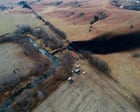
Louisiana state senator Jay Morris is under scrutiny for potentially violating ethics rules after facilitating the establishment of Meta's largest datacenter and subsequently selling adjacent land. Morris denies the allegations and claims the deals were conducted appropriately, raising concerns about conflict of interest and transparency in public service.

Staying informed
about nature.
Daily updates on policies, legal battles, and economic shifts.
Latest Nature Insights: Court Case
Rhino-poaching suspect, repeatedly freed on bail, shot dead in South Africa
Joseph โBig Joeโ Nyalungu, a suspect in rhino poaching, was killed by unknown assailants, highlighting the ongoing violence and risks associated with wildlife crime in South Africa. His frequent releases on bail raise concerns over the effectiveness of legal measures in combating poaching and protecting endangered species. Policymakers may need to address weaknesses in the law enforcement and judicial processes involved in wildlife protection.
A group of young Americans is suing the Trump administration, arguing that recent rollbacks of pollution protections violate their rights to life and liberty by exacerbating climate change and toxic pollution. The lawsuit aims to halt these regulatory changes, highlighting the significance of environmental protections for future generations.
A group of young Americans, led by 20-year-old climate activist Eva, is suing former President Trump, alleging that his executive orders, which roll back pollution protections, violate their rights and exacerbate the climate crisis. They aim to secure a court injunction to prevent these rollbacks from taking effect.
Texas man convicted of buying eagle parts from a wildlife trafficking ring
A Texas man has been convicted for buying parts from bald and golden eagles that were illegally obtained through wildlife trafficking. This case underscores the ongoing challenges in protecting endangered species from poaching and illegal trade.
Tensions rise in DRC mining region as community leaders arrested over protest
The arrest of 11 community leaders in the Democratic Republic of Congo for protesting against mining operations has sparked condemnation from civil society groups, who label the actions as arbitrary and detrimental to local communities. These developments underscore the growing tensions between mining interests and community rights in the region.
Watchdog groups are calling for a Senate investigation into Supreme Court Justice Samuel Alito, alleging that his ownership of oil stocks could lead to conflicts of interest and potential violations of ethics codes in cases he participates in. This situation raises significant concerns regarding judicial impartiality and the influence of financial interests on legal decisions.
Environmental advocates are criticizing the Trump administration's proposal to permit cattle grazing on 24 million acres of federal land, arguing it prioritizes large agricultural interests over wildlife conservation and endangered species protection. Legal actions are being initiated to challenge this plan and protect these vulnerable ecosystems.
Alaska wildlife agents can kill bears to protect caribou, judge rules
A judge has ruled that Alaska wildlife agents are authorized to shoot bears in an effort to protect and recover a declining caribou herd, which historically served as a vital food source for the local population. This decision supports wildlife management strategies aimed at balancing species populations.
Venezuela tells UN court that mineral-rich part of Guyana was โfraudulentlyโ taken in colonial era
Venezuela has presented its case to the UN court, claiming that the mineral-rich region of Guyana was acquired through fraudulent means during the colonial era, referencing a 1966 agreement as part of its argument. The dispute highlights ongoing tensions over territorial claims rooted in historical colonial actions.
The US Supreme Court is considering whether to block lawsuits against Roundup manufacturers, including former Monsanto Company, over claims that glyphosate, the key ingredient in the weedkiller, causes cancer. The outcome could significantly impact future litigation related to pesticide safety and public health.
The US Supreme Court has ruled in favor of Michigan in its efforts to shut down the aging Line 5 energy pipeline, which runs beneath a Great Lakes channel. This decision marks a significant step in the state's legal battle to protect environmental and public safety interests.
A federal judge has issued an injunction that halts Trump administration policies requiring senior officials' direct approval for federal clean energy projects, specifically targeting wind and solar initiatives. This ruling aims to facilitate the advancement of clean energy by removing bureaucratic hurdles imposed by previous restrictions.
Appeals court keeps โAlligator Alcatrazโ open, rejecting need for federal environmental review
An appeals court has upheld the decision to keep the immigration detention center, referred to as โAlligator Alcatraz,โ operational without requiring a federal environmental review, allowing its operations to continue in the sensitive Florida Everglades. The ruling highlights ongoing tensions between immigration policies and environmental concerns in the region.
Climate displacement in Africa: Court opinion could define statesโ obligations ย ย
The African Court on Human and Peoplesโ Rights is set to release an advisory opinion that will clarify the obligations of states towards internally displaced persons due to climate change effects in Africa. This ruling could significantly impact how countries address and manage the challenges posed by climate displacement.
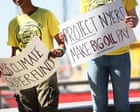
Climate advocacy groups have initiated legal action against the U.S. government for approving a new BP drilling project in the Gulf of Mexico, citing concerns over environmental risks reminiscent of the Deepwater Horizon disaster. They argue that the project poses significant threats to marine ecosystems and public safety.
The Supreme Court ruled in favor of oil and gas firms, including Chevron, allowing them to contest liability for coastal damage in Louisiana, following a lower court's decision that had ordered them to pay millions for cleanup. This 8-0 ruling opens the door for these companies to further defend their positions in federal court.
BP sued in Kenya over alleged toxic waste from 1980s oil exploration
A Kenyan High Court has approved a class action lawsuit against BP, accusing the company of improperly disposing of toxic waste during its oil exploration activities in the 1980s. The ruling allows affected communities to seek justice and compensation for alleged environmental and health damages caused by BP's operations. This case highlights ongoing concerns about environmental accountability in the oil industry.
A lawsuit filed by the NAACP claims that Elon Musk's xAI is unlawfully emitting toxic pollutants from its data center in the Memphis area, disproportionately affecting Black neighborhoods. The legal action seeks accountability for environmental harm and highlights the intersection of technology and environmental justice.
Thai court rules gold mine liable, but villagers face uncertain justice
A Thai court has ruled that the Chatree gold mine is liable for damages in a class action suit brought by local residents, marking a significant legal victory after a decade of litigation. However, the villagers now face challenges in ensuring they receive appropriate compensation, highlighting ongoing uncertainties in environmental justice and community rights.

Another legal challenge for TotalEnergies in South Africa ย
A South African court has annulled an environmental authorization for offshore drilling by TotalEnergies and Shell, raising significant concerns about environmental regulations and corporate accountability in the region. This legal challenge highlights ongoing tensions between energy exploration and environmental protection efforts.
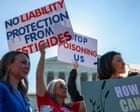
Several U.S. states have filed a lawsuit against the Trump administration's Environmental Protection Agency (EPA) for its decision to repeal the endangerment finding, asserting that greenhouse gases pose a threat to public health. The lawsuit claims this repeal was illegal and undermines regulatory frameworks essential for tackling climate change.
Cambodiaโs Supreme Court denies release of five imprisoned environmental activists
Cambodia's Supreme Court has denied the release of five environmental activists, who have been imprisoned for over 622 days, despite their ongoing appeals. This decision raises concerns about the treatment of environmental advocates in the country and highlights the ongoing struggles for environmental justice.
The Administrator of the EPA held discussions with Bayer's CEO regarding ongoing litigation related to glyphosate, a controversial herbicide, potentially indicating a coordinated effort to address Supreme Court actions. This meeting underscores the intersection of regulatory oversight and corporate interests in environmental health.
Tiny clump of moss helped solve a shocking cemetery crime
A scandal in Illinois was uncovered involving cemetery workers who allegedly exhumed graves and resold burial plots. Investigators used a tiny piece of moss, analyzing its chlorophyll, to confirm the alteration of burial sites, highlighting the importance of environmental clues in forensic investigations.
A North Dakota judge has finalized a $345 million judgment against Greenpeace, significantly reducing the original $667 million damages award sought by Energy Transfer for the organization's involvement in the Dakota Access Pipeline protests. This ruling highlights ongoing tensions and legal repercussions surrounding environmental activism and pipeline development.
A federal judge in Oregon has ruled in favor of protecting endangered salmon populations by rejecting an attempt from the Trump administration to overturn a Biden-era agreement aimed at maintaining sustainable hydropower practices. This decision underscores the importance of legal frameworks in conservation efforts for vulnerable species.
A North Dakota judge has ruled that Greenpeace must pay approximately $345 million in damages after being found liable for defamation and related claims filed by an energy company concerning the Dakota Access pipeline protests. Greenpeace maintains that the case is not concluded and plans to appeal the decision.
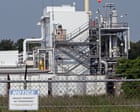
Panama NGOs face lawsuits, asset seizures in fight over port construction
Environmental NGOs in Panama are facing lawsuits and asset seizures as they challenge a contentious port construction project, which they contend threatens marine ecosystems and mangrove habitats. This escalating legal battle highlights the pressures activists face when advocating for environmental protection against significant industrial developments.
Supreme Court agrees to hear from oil and gas companies trying to block climate change lawsuits
The Supreme Court will consider arguments from oil and gas companies that seek to prevent lawsuits aimed at holding them responsible for significant damages associated with climate change. This decision could have major implications for accountability in the fossil fuel industry and the legal framework surrounding climate-related claims.
The US Supreme Court is set to hear a significant climate accountability case involving the city of Boulder and fossil fuel companies Suncor Energy USA and ExxonMobil, which could set a precedent for numerous upcoming climate litigation efforts. The judgment may influence how fossil fuel firms are held accountable for their contributions to climate change.
Extinction Rebellion, an environmental activist group, has disclosed that it is under investigation by the FBI, with some members reportedly visited by agents from the agency's terrorism taskforce. This raises concerns among activists regarding the federal response to environmental advocacy and the implications for civil liberties.